'/%3e%3cpath%20class='cls-1'%20d='M189.91,631.42h0a29.53,29.53,0,0,1-29.53-29.53V477.62c0-122.88,91.44-224.8,209.85-241.28A29.58,29.58,0,0,1,404,265.57h0a29.62,29.62,0,0,1-25.65,29.27c-89.67,12.52-158.91,89.72-158.91,182.78V601.89A29.53,29.53,0,0,1,189.91,631.42Z'%20transform='translate(-67%20-50.58)'/%3e%3cpath%20class='cls-1'%20d='M96.4,477.62a29.36,29.36,0,0,1-29.27-32,338.5,338.5,0,0,1,304.7-304.85A29.5,29.5,0,0,1,404,170.19h0a29.57,29.57,0,0,1-26.83,29.4c-131.12,12.5-238,120-251.07,251a29.88,29.88,0,0,1-29.69,27Z'%20transform='translate(-67%20-50.58)'/%3e%3c/g%3e%3cg%3e%3cpath%20class='cls-1'%20d='M1024.74,313.83a122.91,122.91,0,1,1-18.2-114.19,19.44,19.44,0,0,1-4.78,28L883.51,305.68a19.44,19.44,0,0,1-21.42-32.44L960.87,208A84,84,0,1,0,988,301.17a19.44,19.44,0,0,1,36.75,12.66Zm841.89-24.71a19.43,19.43,0,0,0-24.71,12A84,84,0,1,1,1814.8,208L1716,273.24a19.44,19.44,0,0,0,21.42,32.44l118.25-78.08a19.44,19.44,0,0,0,4.78-28,122.87,122.87,0,1,0,18.2,114.19A19.43,19.43,0,0,0,1866.63,289.13ZM778.12,150.9a122.44,122.44,0,0,0-84,33.28V170.34a19.44,19.44,0,1,0-38.87,0V376a19.44,19.44,0,1,0,38.87,0V273.78a84.11,84.11,0,0,1,84-84,19.44,19.44,0,1,0,0-38.87Zm496.56,0a91.4,91.4,0,0,0-72.1,35.24,91.48,91.48,0,0,0-163.64,56.29V376a19.44,19.44,0,0,0,38.87,0V242.44a52.67,52.67,0,0,1,105.33,0V376a19.44,19.44,0,1,0,38.87,0V242.44a52.67,52.67,0,0,1,105.33,0V376a19.44,19.44,0,1,0,38.87,0V242.44A91.64,91.64,0,0,0,1274.68,150.9ZM1913.56,50.58A19.44,19.44,0,0,0,1894.13,70V376a19.44,19.44,0,0,0,38.87,0V70A19.44,19.44,0,0,0,1913.56,50.58ZM1502.9,150.9A123,123,0,0,0,1380,273.78V476.3a19.44,19.44,0,1,0,38.87,0V273.78a84,84,0,1,1,84,84c-37.69,0-70.29-30.09-70.29-29.71v46.37c-.07.39,30.09,22.21,70.29,22.21a122.89,122.89,0,1,0,0-245.77Z'%20transform='translate(-67%20-50.58)'/%3e%3cpath%20class='cls-1'%20d='M1090.44,508.84a61.29,61.29,0,1,0,61.29,61.29A61.36,61.36,0,0,0,1090.44,508.84Zm0,102.77a41.48,41.48,0,1,1,41.48-41.48A41.52,41.52,0,0,1,1090.44,611.61ZM1733,508.84a61.29,61.29,0,1,0,61.29,61.29A61.36,61.36,0,0,0,1733,508.84Zm0,102.77a41.48,41.48,0,1,1,41.48-41.48A41.52,41.52,0,0,1,1733,611.61Zm-379.49-54.48v64.38a9.91,9.91,0,1,1-19.81,0V557.13a28.48,28.48,0,0,0-57,0v64.38a9.91,9.91,0,1,1-19.81,0V557.13a28.48,28.48,0,1,0-57,0v64.38a9.91,9.91,0,0,1-19.81,0V557.13a48.26,48.26,0,0,1,86.67-29.25,48.26,48.26,0,0,1,86.67,29.25Zm-438.3-38.38v57.57a55.1,55.1,0,1,1-110.19,0V518.74a9.91,9.91,0,0,1,19.81,0v57.57a35.29,35.29,0,1,0,70.57,0V518.74a9.91,9.91,0,0,1,19.81,0ZM1933,563.94v57.57a9.91,9.91,0,1,1-19.81,0V563.94a35.29,35.29,0,0,0-70.57,0v57.57a9.91,9.91,0,1,1-19.81,0V563.94a55.1,55.1,0,1,1,110.19,0Zm-288.49-45.19V621.51a9.91,9.91,0,1,1-19.81,0V518.74a9.91,9.91,0,1,1,19.81,0Zm-681,9.91v65.62a17.35,17.35,0,0,0,17.33,17.33h12.38a9.91,9.91,0,1,1,0,19.81H980.87a37.19,37.19,0,0,1-37.14-37.14v-109a9.91,9.91,0,0,1,19.81,0v23.52h29.72a9.91,9.91,0,1,1,0,19.81Zm588.12,0v65.62A17.35,17.35,0,0,0,1569,611.61h12.38a9.91,9.91,0,1,1,0,19.81H1569a37.19,37.19,0,0,1-37.14-37.14v-109a9.91,9.91,0,1,1,19.81,0v23.52h29.72a9.91,9.91,0,1,1,0,19.81ZM777.81,570.13v51.38a9.91,9.91,0,0,1-19.81,0V570.13a41.47,41.47,0,1,0-7.7,24.07c.08-.12.18-.22.27-.33v27.18a61.26,61.26,0,1,1,27.24-50.92Zm726.79,0v51.38a9.91,9.91,0,1,1-19.81,0V570.13a41.47,41.47,0,1,0-7.7,24.07c.08-.12.18-.22.27-.33v27.18a61.26,61.26,0,1,1,27.24-50.92Z'%20transform='translate(-67%20-50.58)'/%3e%3c/g%3e%3c/g%3e%3c/svg%3e)
Froese Vegetables Inc.
Seasonal and permanent workforce time and piecework tracking and reporting.
- Problem
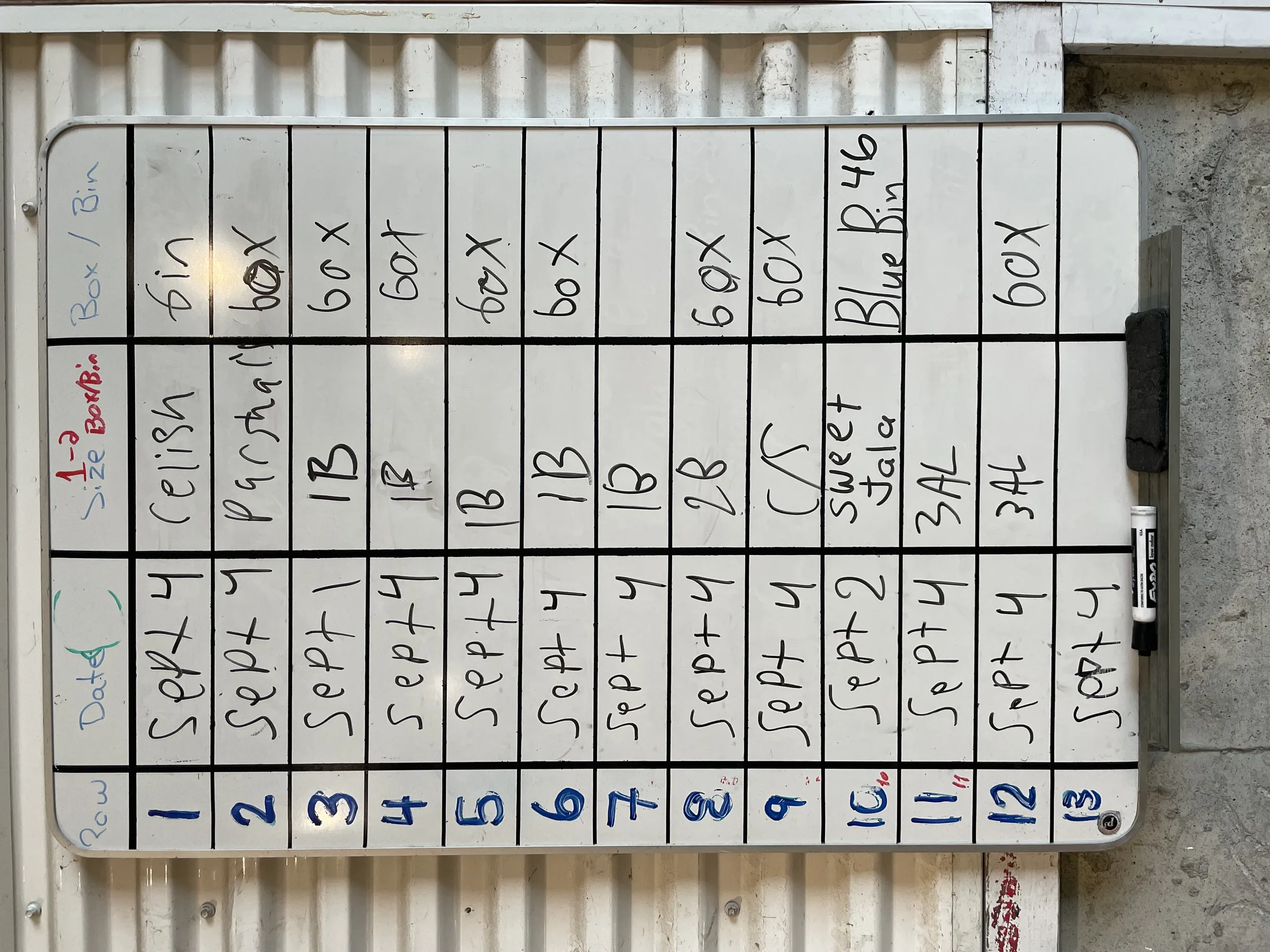
- They already had a time and production package, but field production still landed on paper and was re-keyed each day. It could not model better-of minimum wage and piecework, shared crew production, or year-end stay bonuses, and it did not hand off cleanly into Sage for payment.
- Solution
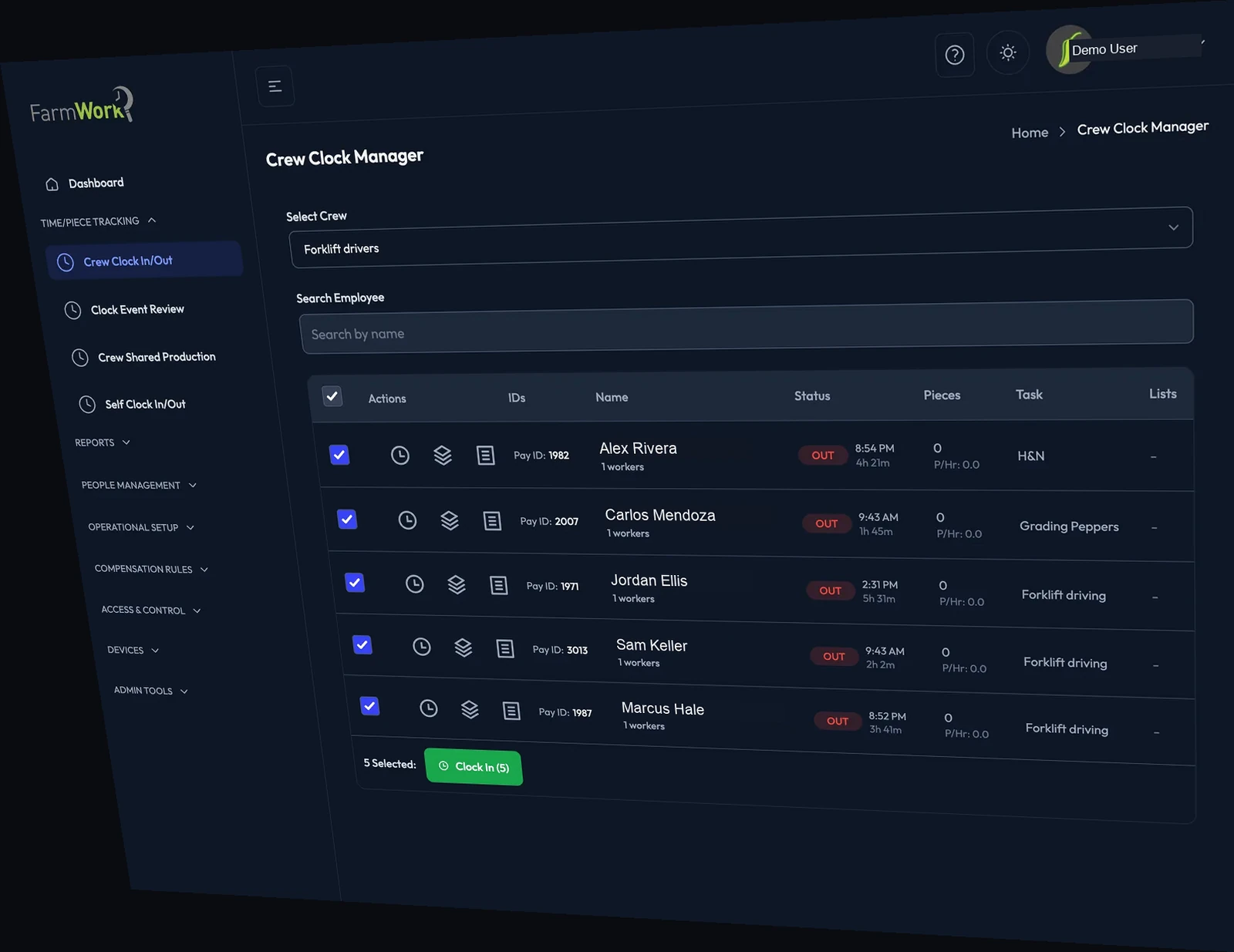
- FarmWork captures time and production in the field or packing area, including offline. It runs complex pay rules in the system, then exports a reviewable file into Sage. Supervisors still own the clock and the count where the work happens.